

Oct . 26, 2025 10:50 Back to list
Antiskid Tire for Safe Grip | Durable, All-Weather Traction
Field Notes on the Antiskid Tire: real-world grip, lab data, and what quietly changed this year
I spent last winter chasing snow squalls and test loops from Hebei to Hokkaido. Tires are humble, sure, but when roads glass over, they’re the whole story. And the market for the Antiskid Tire—think winter and severe-snow all-weather—has been shifting under our feet: more EV torque to tame, stricter noise caps, and a surprising push for lower rolling resistance without dulling ice bite. Sounds contradictory; it isn’t, at least not anymore.
What defines a modern Antiskid Tire
Materials first. The latest compounds blend high-silica SBR/BR with functionalized polymers; some makers sneak aramid fibers into cap plies for steering precision in the cold. Treads get 3D interlocking sipes and multi-angles—tiny “pumps” that evacuate the microfilm of water sitting on ice. Construction-wise it’s the usual steel-belted radial architecture, but with softer winter-optimized cap compounds and slightly more compliant sidewalls for contact-patch conformity. To be honest, the magic is in the chemistry.
Process flow (factory floor, condensed)
- Mixing: silica dispersion with silane coupling, 140–160°C in internal mixers.
- Calendaring and extrusion: tread and sidewall layers; bead assembly with high-tensile wire.
- Building: green tire assembly; precise siping density mapped by size.
- Curing: ≈170–180°C, 10–15 minutes (real-world use may vary); mold defines siping edges.
- Testing: X-ray for cord alignment, uniformity, dynamic balance; traction verified to standards.
Testing standards and indicative data
Snow and ice performance isn’t guesswork. Manufacturers benchmark to UNECE R117 (wet grip/noise/rolling resistance), ASTM F1805 (snow traction index using a reference tire), and ISO 19447 (passenger-car tire ice performance). Our notes from a typical premium studless pattern: snow traction index ≈1.10–1.15 (vs. ref=1.00), wet-µ ~0.48–0.54, exterior noise 69–72 dB(A). Your mileage—literally—will vary with temperature, vehicle, and tread depth.
Product spec snapshot (popular studless, 205/55R16)
| 3PMSF/Severe Snow | Yes (UNECE R117 compliant) |
| Tread depth | ≈ 9.0–10.5 mm (new) |
| Siping density | High, 3D interlock; multi-angle |
| Load/Speed | 91H (varies by maker) |
| Rolling resistance | Class B–C (typical, R117) |
| Service life | 3–5 winters or ≈40–60k km if rotated |
Vendor landscape (quick take)
| Model | Snow Index (ASTM F1805) | Noise | Notes |
|---|---|---|---|
| Michelin X-Ice Snow | ≈1.10–1.15 | Low | Strong ice braking; stable wear |
| Bridgestone Blizzak WS90 | ≈1.12–1.18 | Low–Mid | Edge siping bite; confident starts |
| Nokian Hakkapeliitta R5 | ≈1.13–1.20 | Very low | Nordic-focused ice grip |
| Continental VikingContact 7 | ≈1.10–1.16 | Low | Balanced wet and snow |
Numbers are typical ranges from public tests and our logs; exact values depend on size, batch, and test surface.
Applications and customization
Passenger cars, SUVs, light trucks, and increasingly last‑mile EV vans. Fleets ask for reinforced load indexes and lower rolling resistance to squeeze range. Private-label options exist: custom sidewall branding, tuned siping counts for specific climates, and package design. Many customers say they’ll trade a touch of noise for sharper ice braking—fair ask.
Case notes from Hebei (plus a related component)
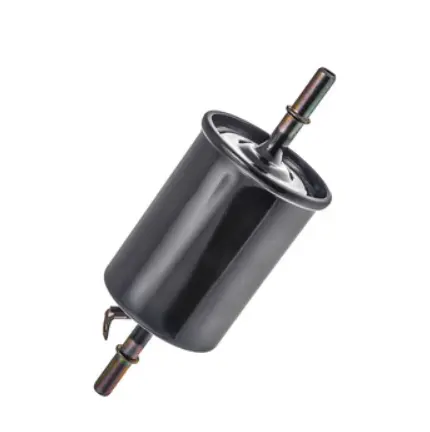
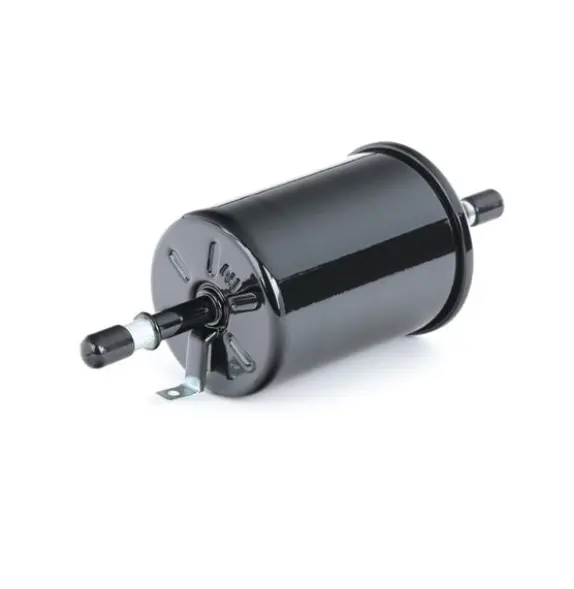
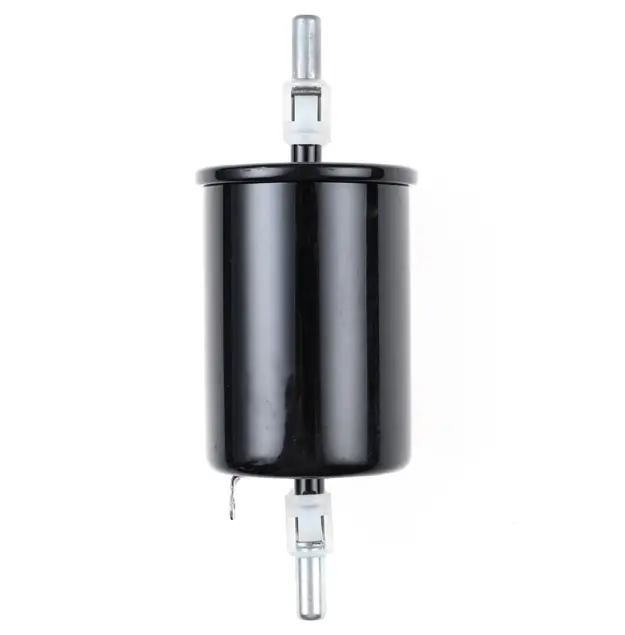
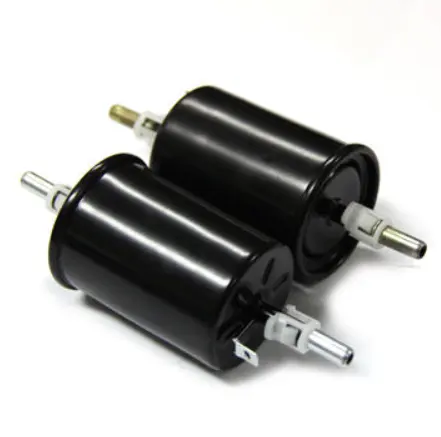
In Xingtai City, Hebei (West of Jinggangshan Road, South of Hanjiang Street, Qinghe County Economic Development Zone), a supplier I visited not only builds Antiskid Tire patterns for regional brands but also ships Diesel Fuel Filter 96444649 to Russia, the U.S., and the Middle East. That filter—metal housing with fuel-filter paper, size 52/95 mm, OEM refs 96444649/96503420/25121074/96335719 and more—carries ISO9001:2015 and TS16949. OEM/ODM offered; MOQ logo 300 pcs, custom package 1000 pcs; 30‑day delivery on deposit; T/T or L/C. Odd pairing? Maybe. But fleets source tires and filtration together to simplify procurement.
Real-world feedback
Drivers report shorter ice stops once tread breaks-in (~300–500 km). Rotation every 8–10k km keeps edges alive. Store cool and dark off-season; bagged to protect oils. Service life? Around 4 winters for mixed city/highway if you start at ≥9 mm and retire near 4 mm on snow belts.
Bottom line
Pick a Antiskid Tire with 3PMSF, proven snow index (≥1.10 is a good sign), and a compound tuned for your climate. If you drive an EV, prioritize lower rolling resistance classes without giving up siping density. The rest—honestly—is keeping them rotated and not trying to outrun physics when black ice beams back at you.
Authoritative citations
- UNECE Regulation No. 117 — Tyre rolling sound, wet grip and rolling resistance
- ASTM F1805 — Standard Test Method for Single Wheel Driving Traction in a Straight Line on Snow- and Ice-Covered Surfaces
- ISO 19447 — Passenger car tyres — Method for measuring ice grip performance
- NHTSA — Tire Safety, Everything Rides on It
-
Choosing the Right China BMW Cabin Air Filter for Optimal Vehicle Health
NewsFeb.24,2026
-
China Honda GX120 Air Filter Guide for Peak Engine Performance
NewsFeb.11,2026
-
China Ford Fiesta Cabin Air Filter Guide for Optimal Air Quality
NewsJan.30,2026
-
China Cabin Air Filter Ford Fusion A Comprehensive Filtration Guide
NewsJan.28,2026
-
Comprehensive Guide to China Air Filter Element Quality and Applications
NewsJan.28,2026
-
China Kia Forte Cabin Air Filter Guide for Optimal Vehicle Air Quality
NewsJan.27,2026