

Oct . 14, 2025 08:45 Back to list
China Car Cabin Filter Supplier | OEM Quality & Fast Ship
Inside the supply chain of a china car cabin filter supplier: tech, trends, and what really matters
I’ve walked a few factory floors where cabin filters are pleated, charged, and boxed by the thousand. It’s repetitive, sure, but there’s real engineering under the hood. And lately, demand is up—urban dust, wildfire smoke, allergy seasons that feel longer each year. Distributors keep telling me they want reliable fit, honest filtration data, and lead times that don’t slip. That’s the daily scoreboard for any china car cabin filter supplier.
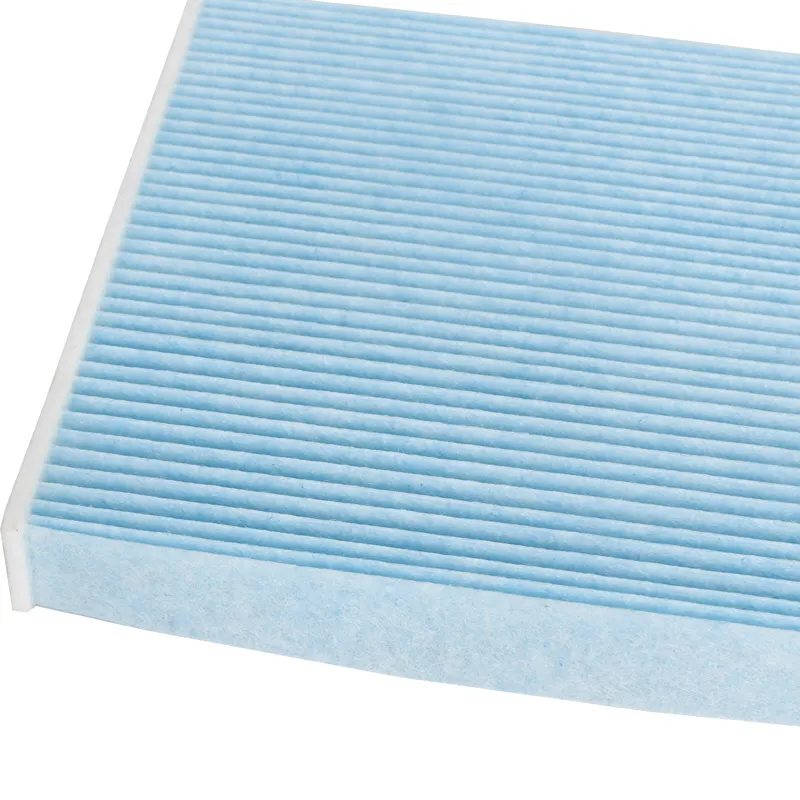
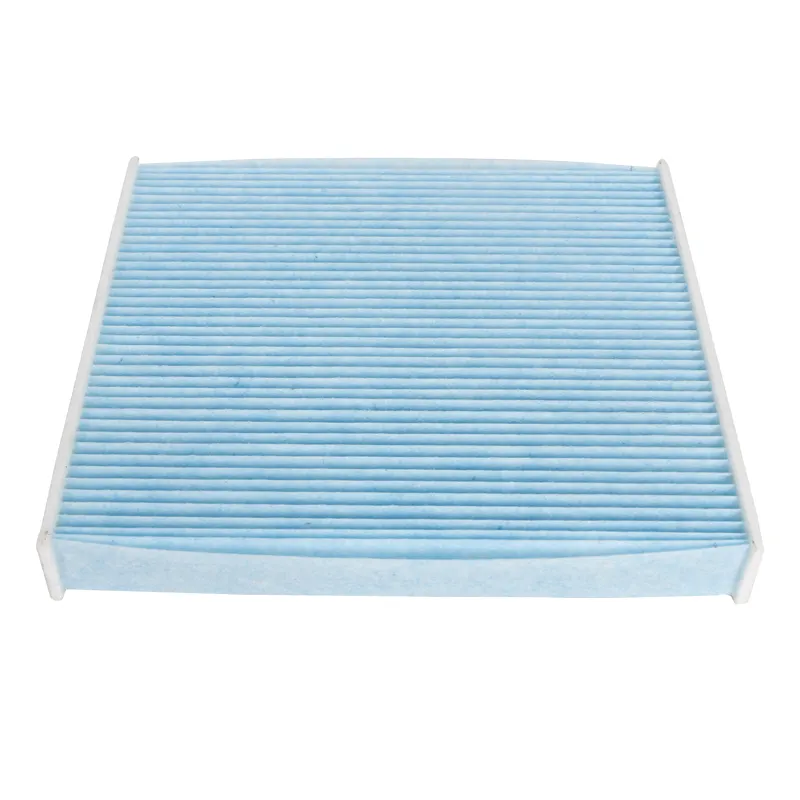
Product snapshot: Car cabin filters supplier 87139-06080 / 87139-30070
| OEM No. | 87139-06080, 87139-30070 (≈ also 87139-50060 in some catalogs) |
| Media | Blue non-woven electret; optional carbon layer for odor control (on request) |
| Size | 193 × 213 × 30 mm |
| Certifications | ISO 9001:2015, TS 16949/IATF lineage |
| Typical test data | PM2.5 efficiency ≈ 90–95% (ISO 11155-1 conditions); initial ΔP ≈ 70–110 Pa @ 120 m³/h — real-world use may vary |
| Service life | 10,000–15,000 km or 6–12 months, depending on dust load and climate |
| OEM/ODM | Available; custom logo MOQ 300 pcs; custom package MOQ 1000 pcs |
| Lead time & payment | ≈ 30 days after deposit; T/T or L/C |
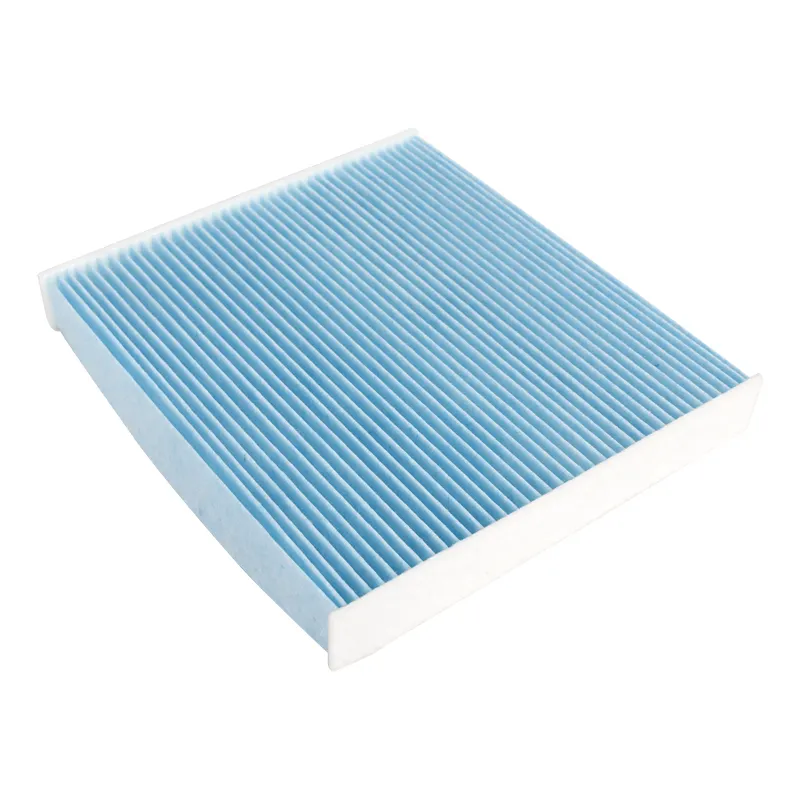
Process flow (how it’s actually made)
- Materials: Blue electret non-woven (often polypropylene), optional activated carbon veil, PP frame.
- Methods: Pre-cutting, pleating (knife/rotary), ultrasonic edge welding, frame gluing, curing.
- QC checkpoints: Dimension gauge, pleat depth consistency, media basis weight, adhesion test.
- Testing standards: ISO 11155-1 (particulate), ISO 11155-2 (gaseous), GB/T 32085.1-2015 for bench methods.
- End-of-line: Flow/ΔP verification and random PM capture test—batch retained samples for traceability.
The facility I visited in Hebei—West of Jinggangshan Road, South of Hanjiang Street, Qinghe County Economic Development Zone, Xingtai City—runs a tidy line. Not flashy, but consistent. Many customers say consistency beats marketing, and I tend to agree.
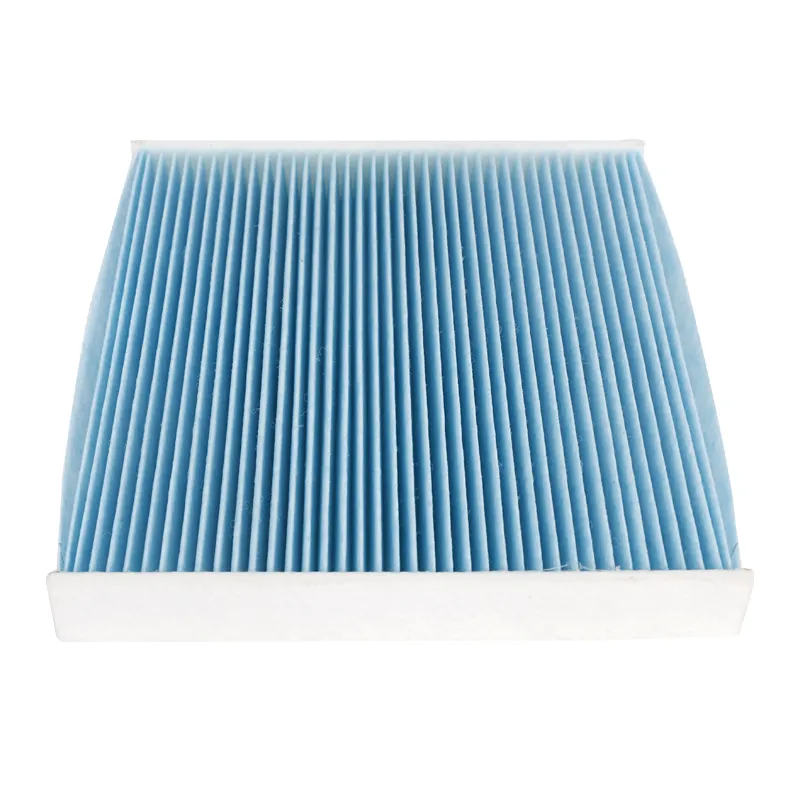
Where these filters work best
Applications: passenger cars (Toyota/Lexus fitments for the OEM numbers above), light commercial vehicles, ride-hailing fleets, rental cars. In fact, city-driving with construction dust or during pollen season is where a good china car cabin filter supplier earns its keep. Carbon versions help with odors from traffic tunnels and, to be honest, those mysterious parking-garage smells.
Vendor comparison (field-notes version)
| Factor | ANT Filter (Hebei) | Trading-only supplier | Premium global brand |
|---|---|---|---|
| Lead time | ≈ 25–30 days | ≈ 35–45 days | ≈ 20–30 days |
| Certs | ISO 9001, TS/IATF lineage | Varies | IATF 16949 |
| Customization | Logo ≥300 pcs; package ≥1000 pcs | Limited | Available, costlier |
| Price band | Mid | Low–mid | High |
| QC transparency | Batch test sheets available | Occasional | Full |
Real-world notes, trends, and cases
Trends first: carbon media adoption is creeping up (drivers hate odors), and fleets want PM2.5 claims tied to ISO 11155-1, not vague “HEPA-like” language. Also, surprisingly, blue-dyed media is preferred by some distributors simply because it “looks cleaner” on unboxing—humans are funny that way.
- US fleet case: complaint tickets about cabin odor dropped ≈28% after switching to carbon option.
- Middle East taxis: extended change interval from 8k to ≈12k km during mild season, thanks to better dust holding.
- Russia distributor: SKU fill-rate improved with 30-day lead times—stockouts cut in half, they told me.
Buying checklist (quick)
Match OEM numbers; ask for ISO 11155-1 test curves; check ΔP at your region’s airflow; confirm logo/package MOQs; and make sure the china car cabin filter supplier can trace batches. Actually, that last one saves headaches.
Citations
- ISO 11155-1: Road vehicles — Air filters for passenger compartments — Part 1: Test methods for particulate filtration.
- ISO 11155-2: Road vehicles — Air filters for passenger compartments — Part 2: Test methods for gaseous filtration.
- GB/T 32085.1-2015: Road vehicles — Air filters for driver’s compartments — Part 1 (China standard).
- IATF 16949:2016 — Automotive Quality Management System Requirements.
-
Choosing the Right China BMW Cabin Air Filter for Optimal Vehicle Health
NewsFeb.24,2026
-
China Honda GX120 Air Filter Guide for Peak Engine Performance
NewsFeb.11,2026
-
China Ford Fiesta Cabin Air Filter Guide for Optimal Air Quality
NewsJan.30,2026
-
China Cabin Air Filter Ford Fusion A Comprehensive Filtration Guide
NewsJan.28,2026
-
Comprehensive Guide to China Air Filter Element Quality and Applications
NewsJan.28,2026
-
China Kia Forte Cabin Air Filter Guide for Optimal Vehicle Air Quality
NewsJan.27,2026